Category: Python Basics
Master the fundamentals of Python programming with beginner-friendly tutorials. Learn syntax, data types, loops, functions, and best coding practices.
Why comments matter in code clarity Writing code that works is only half the battle. Understanding that code weeks later is just as important. Comments guide readers through logic and decisions without deciphering every line. This clarity speeds debugging and collaboration. Imagine revisiting a project after months. Well-placed notes explain why a particular function sorts …
Continue reading
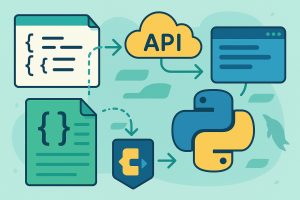
A clear guide for handling JSON in real-world API workflows using Python APIs often speak one common language: JSON. It’s the format used by most web services to send and receive structured data. Whether you’re building a chatbot, connecting to a payment gateway, or pulling in data from a weather service, chances are you’ll be …
Continue reading
Why Object-Oriented Programming Matters in Python Development Python is loved for its flexibility, and object-oriented programming (OOP) is a big reason why it works so well for complex projects. OOP organizes code into reusable pieces that model real-world things, making software easier to build and understand. Developers, content creators, and small businesses all benefit from …
Continue reading
Importance of File Handling Skills in Everyday Python Development Working with files is a basic yet powerful skill every Python developer needs. Whether reading configuration settings, loading data, or managing logs, handling file input and output keeps applications flexible and efficient. Good file handling practices prevent mistakes and make programs run more smoothly. Understanding the …
Continue reading
The Role of Unicode Emojis in Python Emojis have transformed digital communication, adding an expressive layer to conversations across messaging apps, social media platforms, and web applications. Their widespread use has made them an essential part of modern communication, conveying emotions and ideas with a single character. Python, being a highly versatile programming language, provides …
Continue reading
Making data processing faster and cleaner with Python’s functional programming tools When processing lists of data in Python, there are times you need to transform each item or select only specific parts. Instead of writing lengthy loops, there’s a cleaner and more elegant way—the built-in map() and filter() functions. These tools help make your code …
Continue reading
The Primary Role of Functions in Python Programming A function is a block of code used to perform a specific task whenever needed. Instead of writing the same lines of code repeatedly, you put them into a function to make your code cleaner and easier to understand. In Python, creating a function is simple and …
Continue reading
Understanding Lists and Dictionaries Python is renowned for its ease of use when it comes to handling lists and dictionaries. These two types of data structures are essential for building clean and organized code. By learning about them, you open the door to more advanced programming techniques. Lists store sequential data that can be modified, …
Continue reading
Basic Data Types in Python In the world of Python, it is important to understand the various data types available. Data types form the foundation of every operation in programming. Choosing the correct data type helps create clear and efficient code. When you know the basic data types, you can decide which one is best …
Continue reading
Understanding Python’s Indentation-Based Structure Python stands out among programming languages due to its distinctive reliance on indentation rather than curly braces {} to define code blocks. This approach enhances readability and enforces a structured coding style, reducing ambiguity in formatting. However, for developers accustomed to languages like C, Java, and JavaScript, which use curly braces …
Continue reading
